

Why Is H1Z2Z2-K Photovoltaic Solar Cable Ideal for Residential and Commercial Solar Systems
2026-11-13
Solar installers and system designers increasingly specify H1Z2Z2-K Photovoltaic Solar Cable for rooftop and ground-mounted projects, and Qiancheng has supplied this cable to residential and commercial installations across demanding climates. The reasons come down to insulation chemistry, temperature ratings, and long-term reliability under UV and mechanical stress. This article explains the technical basis for that specification choice and where the cable performs best.
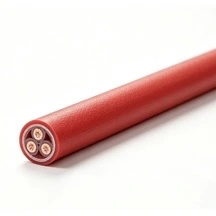
Understanding the H1Z2Z2-K Designation
The designation is not marketing language; each element carries a defined meaning under EN 50618.
| Code Element | Meaning | Practical Benefit |
|---|---|---|
| H | Harmonized cable type | Consistent European specification |
| 1 | Rated voltage 1.0/1.0 kV DC | Suitable for PV string voltages |
| Z2 | Cross-linked elastomer insulation | High thermal and UV resistance |
| Z2 | Cross-linked elastomer sheath | Mechanical and ozone protection |
| K | Flexible conductor, Class 5 | Easier routing in tight arrays |
Qiancheng manufactures H1Z2Z2-K Photovoltaic Solar Cable to this standard, with conductor stranding and cross-linking verified batch by batch.
Key Performance Advantages
-
Temperature range of −40 °C to +90 °C, with a 120 °C short-circuit allowance, supporting continuous rooftop operation in high-irradiance regions.
-
Halogen-free, low-smoke construction that reduces toxic gas emission in fire conditions, a requirement in many commercial building codes.
-
UV and ozone resistance tested to EN 50618, allowing exposed outdoor routing without conduit in approved layouts.
-
Class 5 flexible conductor that simplifies pulling through cable trays and around module frames.
-
Expected service life of 25 years under rated conditions, aligned with module warranty periods.
Residential Versus Commercial Requirements
| Requirement | Residential Systems | Commercial Systems |
|---|---|---|
| Typical string voltage | Up to 600 V DC | Up to 1000 V DC or higher |
| Routing environment | Roof, attic, wall penetrations | Cable trays, long outdoor runs |
| Fire safety priority | Low smoke in occupied spaces | Code-driven LSZH compliance |
| Mechanical exposure | Moderate | Higher, including rodent and abrasion risk |
| Recommended cross-section | 4–6 mm² | 6–10 mm² |
Qiancheng supplies both configurations with matched connector compatibility and full test documentation.
Installation and Compliance Notes
-
Confirm DC voltage rating against maximum string voltage at lowest expected temperature.
-
Maintain minimum bend radius per manufacturer data, typically 4× outer diameter for fixed installation.
-
Use only compatible connector systems to avoid galvanic mismatch.
-
Support cables at intervals in exposed runs to limit wind-induced fatigue.
-
Record test certificates for commissioning documentation.
H1Z2Z2-K Photovoltaic Solar Cable FAQ
Q: What does the H1Z2Z2-K rating actually certify?
A: It certifies a harmonized, halogen-free, cross-linked cable rated at 1.0/1.0 kV DC with a −40 °C to +90 °C service range and 120 °C short-circuit tolerance, tested for UV, ozone, and dynamic mechanical performance under EN 50618.
Q: Can H1Z2Z2-K Photovoltaic Solar Cable be installed in direct sunlight without conduit?
A: Yes, where local code permits, because the cross-linked sheath passes EN 50618 UV and ozone aging tests; exposed runs should still be supported and routed away from standing water and sharp edges.
Q: How does H1Z2Z2-K Photovoltaic Solar Cable differ from H1Z2Z2-F?
A: The K suffix denotes a flexible Class 5 conductor for easier routing, while F denotes a fine-strand variant; both share the same insulation and sheath chemistry and voltage rating, so selection depends on bending requirements rather than electrical performance.
For datasheets, cross-section availability, and project-specific quotations on H1Z2Z2-K Photovoltaic Solar Cable, contact Qiancheng today and our technical team will match the right cable specification to your residential or commercial solar system.