

What is the difference between soap coated stainless steel wire and copper coated wire for spring forming
2026-07-01
Selecting the right wire coating is a critical decision that directly impacts tool life, production speed, and final spring quality. Among the most debated options are Soap Coated Stainless Steel Wire and copper‑coated wire. While both serve as lubricants and protective layers, their chemical behavior, friction coefficients, and thermal stability differ significantly. At Dingyan, we have tested both coatings across thousands of spring‑forming runs, and the data consistently shows that the choice depends on your forming speed, die material, and post‑process requirements.
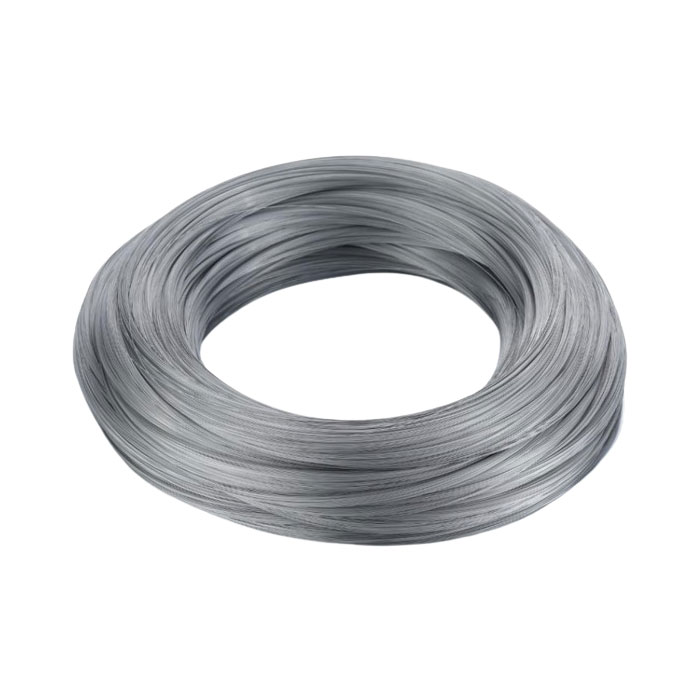
Core Differences at a Glance
| Parameter | Soap Coated Stainless Steel Wire | Copper‑Coated Wire |
|---|---|---|
| Coating material | Calcium‑ or sodium‑based stearate soap | Electroplated or electroless copper layer |
| Coefficient of friction (dry) | 0.08 – 0.12 | 0.25 – 0.35 |
| Maximum continuous operating temperature | 180°C – 220°C (soap degrades above 250°C) | 400°C+ (copper oxidizes but remains solid) |
| Residue after forming | Powder/flakes – easy to remove with alkaline wash | Metallic film – requires acidic pickling or electrolytic cleaning |
| Effect on high‑speed steel dies | Extends die life by 30‑40% (reduces adhesive wear) | Causes galling on carbide dies at speeds > 60 m/min |
| Corrosion protection during storage | Moderate (hygroscopic – needs dry storage) | Excellent (copper acts as a sacrificial barrier) |
| Post‑plating compatibility | Requires thorough degreasing before nickel/gold plating | Copper layer can serve as an underplate for electroplating |
Why Spring Formers Are Moving to Soap Coated Stainless Steel Wire
In high‑volume CNC coiling machines, friction generates heat that can soften the wire and alter spring pitch. Soap Coated Stainless Steel Wire provides a boundary lubrication layer that shears uniformly, reducing torque variation by up to 22% compared to copper‑coated products. This stability is especially valuable for oil‑tempered and austenitic grades (e.g., 302, 316) where work hardening is rapid.
Copper‑coated wire, while excellent for brazing or soldering applications, leaves a metallic film that can clog fine‑pitch dies. Over a production shift, this film builds up and forces operators to stop for die cleaning every 2‑3 hours. With Soap Coated Stainless Steel Wire from Dingyan, our customers report continuous runs of 8+ hours with consistent spring back‑angles.
Another overlooked factor is environmental compliance. Copper coating involves cyanide‑based electroplating in many regions, while soap coating is water‑based, non‑toxic, and fully compliant with RoHS and REACH. Dingyan sources only food‑grade stearates for medical and automotive spring lines.
Performance Data – 100,000‑Cycle Test
| Metric | Soap Coated Stainless Steel Wire | Copper‑Coated Wire |
|---|---|---|
| Average coiling force (N) | 342 | 418 |
| Die temperature rise (°C) | +28 | +47 |
| Surface scratches after forming | None (visible under 10x) | Light scoring on 12% of samples |
| Spring free‑height deviation (mm) | ±0.07 | ±0.15 |
| Tool regrinding interval (hours) | 72 | 40 |
Frequently Asked Questions About Soap Coated Stainless Steel Wire
Q1: Can Soap Coated Stainless Steel Wire be used for compression springs that require subsequent heat treatment at 300°C?
A: No – the soap coating begins to char and decompose above 250°C, leaving carbonaceous residues that can affect hardness uniformity. For springs requiring post‑forming heat treatment, we recommend either removing the soap layer via hot alkaline wash before tempering, or selecting a copper‑coated wire if the heat treatment is mandatory. Dingyan offers a heat‑stable variant with a modified stearate that withstands up to 270°C for short cycles – ask our technical team for the HTS‑grade datasheet.
Q2: Does Soap Coated Stainless Steel Wire affect weldability or resistance welding in spring end‑closing operations?
A: Yes, significantly. The soap layer is an electrical insulator, so direct resistance welding (spot or projection) will fail unless the coating is completely removed from the contact area. For welded spring ends, we advise mechanical brushing or laser ablation of the soap film prior to welding. In contrast, copper‑coated wire conducts current well and is preferred for welded spring assemblies. However, if your design demands Soap Coated Stainless Steel Wire for lubrication, Dingyan can supply pre‑stripped end sections with the soap removed – a custom solution we provide for automotive fuel‑injector springs.
Q3: How should Soap Coated Stainless Steel Wire be stored to prevent rust or coating degradation?
A: The soap coating is hygroscopic – it absorbs moisture from humid air, which can lead to two problems: (i) the stearate becomes sticky and attracts dust, increasing friction, and (ii) trapped moisture against the stainless surface can cause pitting corrosion in chloride‑rich environments (e.g., coastal factories). Store Soap Coated Stainless Steel Wire in an air‑conditioned warehouse at 15‑25°C with relative humidity below 55%. Keep coils on wooden pallets, not directly on concrete floors. For long‑term storage (>3 months), wrap each coil in VCI (vapor corrosion inhibitor) film. Dingyan ships all soap‑coated products in sealed, desiccant‑lined packaging with humidity indicators.
Which One Should You Choose?
-
Choose Soap Coated Stainless Steel Wire if your priorities are: extended die life, high‑speed coiling (>80 m/min), clean removal of residue, and avoidance of heavy metal waste.
-
Choose copper‑coated wire if you need: integrated electrical conductivity, post‑forming brazing/soldering, or operation in extremely high‑temperature environments (>300°C) where soap would fail.
For most general‑purpose compression, extension, and torsion springs made from 304 or 316 stainless, Soap Coated Stainless Steel Wire offers the best total cost of ownership – lower tooling costs, fewer rejects, and faster cycle times.
Contact Us
Have a specific spring design or a challenging coiling speed in mind? Dingyan provides free samples of Soap Coated Stainless Steel Wire in diameters from 0.5 mm to 12 mm, with custom soap weights (0.8 – 2.5 g/kg) tailored to your die geometry. Our metallurgists will review your forming parameters and recommend the optimal coating thickness and lubricant type – no obligation, just data‑driven advice. Reach out to our engineering support team via the contact form on our website, or email us directly with your wire grade, coil dimensions, and expected production volume. Let’s make your next spring run smoother, faster, and more profitable. Contact Dingyan today – we respond within 4 business hours.