

What Happens If You Use the Wrong Impedance RF Cable Connector
2026-06-11
When building or maintaining a radio frequency system, every component must work in harmony. One of the most overlooked yet critical choices is the impedance rating of your RF Cable Connector. Most modern systems operate at 50 Ohms or 75 Ohms. Mixing them is not a minor error—it is a performance killer. At L-linke, we have seen countless field failures caused by this single mistake. Understanding the consequences can save your equipment and your signal.
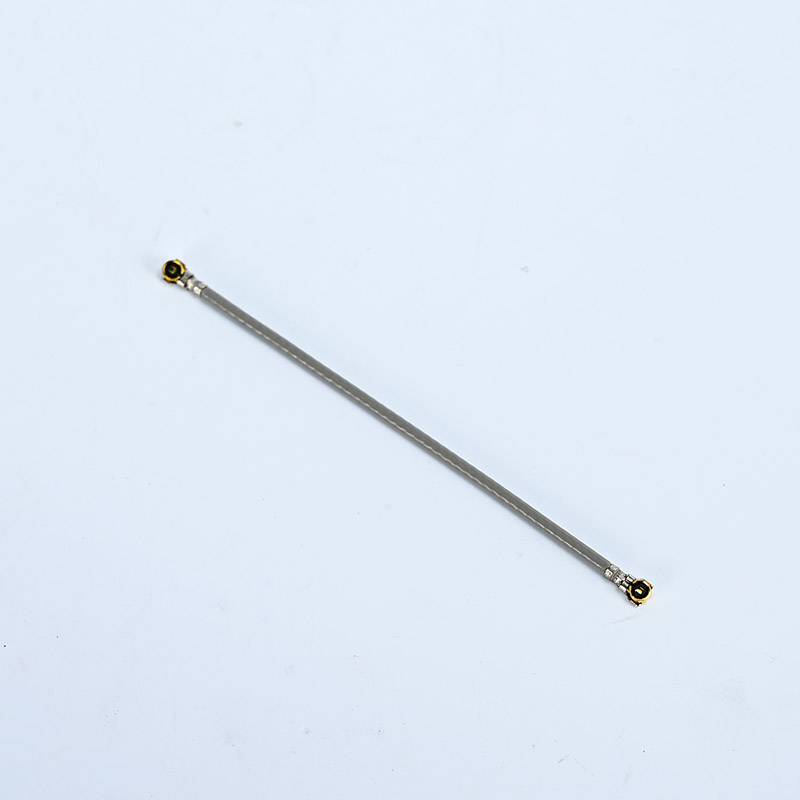
Immediate Consequences of Impedance Mismatch
Using an RF Cable Connector with the wrong impedance creates a discontinuity in the transmission path. This mismatch causes three measurable effects:
| Consequence | 50Ω System with 75Ω Connector | 75Ω System with 50Ω Connector |
|---|---|---|
| VSWR (Voltage Standing Wave Ratio) | Increases to >1.5:1 | Increases to >1.5:1 |
| Return Loss | Drops by 5–7 dB | Drops by 5–7 dB |
| Insertion Loss | Adds 0.5–1.0 dB extra loss | Adds 0.5–1.0 dB extra loss |
Higher VSWR means power reflects back to the transmitter. This reflected power does not radiate. Instead, it heats up the final amplifier stage.
Long-Term Damage to Your System
A mismatched RF Cable Connector does not just reduce efficiency. It actively harms hardware. Below is a summary of component risks:
| System Component | Risk from Wrong Impedance RF Cable Connector |
|---|---|
| Power Amplifier | Overheating, reduced lifespan, premature failure |
| Receiver Front-End | Desensitization, higher noise figure |
| Transmission Line | Dielectric breakdown, arcing under high power |
| Antenna | Poor radiation pattern, detuning |
For high-power broadcast or industrial RF systems, arcing inside the RF Cable Connector can ignite surrounding materials. This is a fire hazard.
RF Cable Connector FAQ – Common Questions
Q1: Can I temporarily use a 75-ohm RF Cable Connector in a 50-ohm system if I reduce power?
A1: Reducing power does lower heat generation from reflected waves, but it does not eliminate the impedance discontinuity. The RF Cable Connector still creates a mismatch that distorts signal integrity, especially in digital or modulated signals. For testing at very low power (under 1 watt), the system may survive, but performance metrics such as error vector magnitude (EVM) will suffer. L-linke strongly recommends replacing the connector rather than risking unpredictable behavior or gradual transmitter damage.
Q2: How do I identify the impedance of an RF Cable Connector without a datasheet?
A2: Visual inspection is unreliable because both 50Ω and 75Ω RF Cable Connector types often share the same physical interface (e.g., BNC or N-type). The key differentiator is the center pin and dielectric. A 75Ω connector typically has a smaller center pin diameter and a thinner dielectric around it. For N-type connectors, the 75Ω version has a reduced center pin. However, the only foolproof method is to use a time-domain reflectometer (TDR) or refer to the manufacturer’s marking. L-linke laser-engraves impedance value on every connector body for instant identification.
Q3: Will a wrong-impedance RF Cable Connector cause permanent damage to a low-power device like an SDR receiver?
A3: Yes, even at low power (10–100 mW), the mismatch can cause permanent damage over time. The reflected energy travels back into the receiver’s mixer and LNA (low-noise amplifier). These components are not designed to absorb reflected power. Repeated stress gradually degrades the LNA’s noise figure and can eventually break down the mixer’s delicate semiconductor junction. Users have reported desensitization and increased spurious responses after weeks of operating with a mismatched RF Cable Connector. For reliable SDR performance, always match impedances perfectly.
Best Practices for Avoiding Impedance Errors
-
Always verify the impedance specification before installing any RF Cable Connector.
-
Use color-coded or labeled connectors from L-linke to prevent confusion.
-
When adapting between impedances, use a resistive matching pad, not a simple adapter.
-
Test completed assemblies with a VNA (vector network analyzer) to confirm return loss >20 dB.
Conclusion
The wrong impedance RF Cable Connector is not a harmless mismatch. It degrades signal quality, heats up components, and shortens system lifetime. L-linke engineers every RF Cable Connector to precise 50Ω or 75Ω standards, ensuring your RF chain performs as designed.
Contact us today at L-linke for a free impedance verification of your current connector inventory. Our technical team will help you select the correct RF Cable Connector for your application and provide sample testing reports. Reach out via our website or email to secure your system’s reliability.