

How to Choose the Right Shielded Coal Shearer Rubber Cable for Your Shearer
2026-10-22
Selecting the correct Shielded Coal Shearer Rubber Cable is one of the most consequential decisions for any underground coal mining operation. A cable that fails prematurely can halt production, create serious safety hazards, and drive up maintenance costs across the entire longwall or continuous mining system. At Qiancheng, we have spent years engineering cables that withstand the extreme mechanical, electrical, and environmental demands of shearer applications. This guide walks through the practical criteria that matter most when specifying a Shielded Coal Shearer Rubber Cable for your specific shearer model and operating conditions.
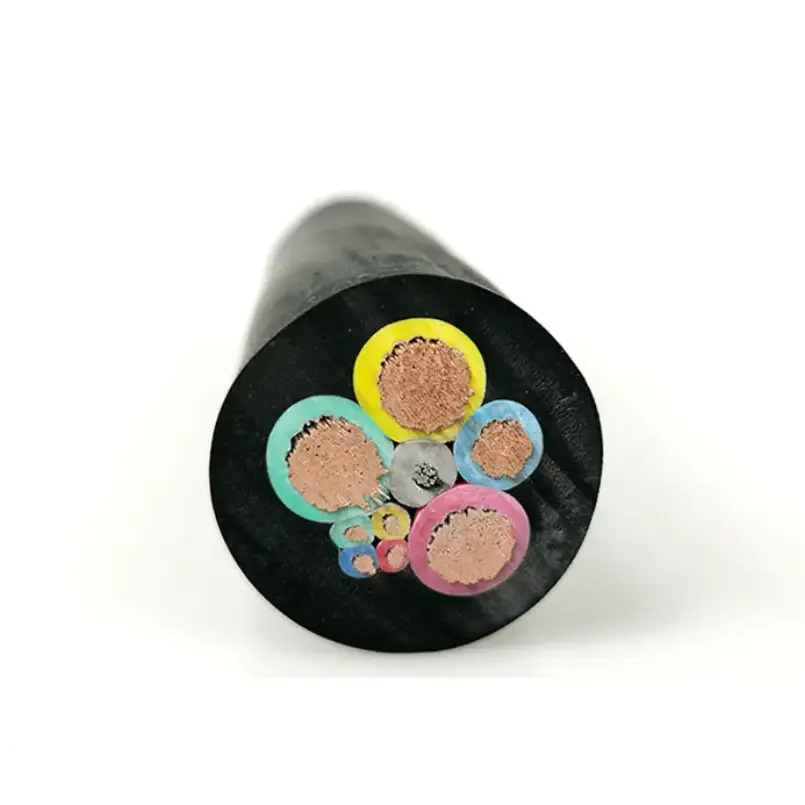
1. Understand the Electrical and Mechanical Demands of Your Shearer
Before comparing suppliers, define the load profile your cable must carry. Shearer cables are subjected to continuous flexing, tension, bending, and occasional impact from rock and machinery. The table below summarizes the core parameters to confirm with your equipment manufacturer.
| Parameter | What to Verify | Why It Matters |
|---|---|---|
| Rated voltage | Match shearer motor and control circuit requirements | Prevents insulation breakdown and overheating |
| Conductor cross-section | Confirm current-carrying capacity under continuous load | Avoids voltage drop and thermal stress |
| Shield construction | Check braided or foil shield coverage and drain wire | Ensures EMI protection for control and monitoring signals |
| Bending radius | Compare cable flexibility with shearer cable-handling system | Reduces fatigue failure in trailing cable applications |
| Jacket compound | Verify rubber formulation for abrasion, oil, and flame resistance | Extends service life in harsh face conditions |
2. Evaluate Jacket and Insulation Materials
The rubber compound is where long-term reliability is won or lost. High-quality Shielded Coal Shearer Rubber Cable uses robust insulation and a heavy-duty outer sheath engineered for repeated reeling, dragging, and exposure to coal dust, water, and hydraulic fluids. Ask suppliers for compound data sheets, flame-retardant performance, and abrasion test results. Qiancheng formulates jacket materials specifically for shearer duty cycles, balancing flexibility with mechanical toughness.
3. Confirm Certification and Standards Compliance
Mining cables must meet the relevant national and international standards for flame retardance, electrical safety, and mechanical performance. Request test reports and certificates before approval. A supplier unable to provide traceable documentation represents a compliance risk that no price advantage can offset.
4. Check Shield Effectiveness for Control Circuits
The shield is not a formality. In modern shearers, control, monitoring, and communication signals share the cable with power conductors. Ineffective shielding allows electromagnetic interference to corrupt signals, triggering nuisance trips and diagnostic faults. Verify shield coverage percentage, drain wire construction, and transfer impedance where available.
5. Assess Mechanical Protection and Handling Performance
Consider how the cable interacts with the shearer's cable handling system, guidance chain, and bending loops. A cable that is too stiff may kink; one that is too soft may flatten under tension. Review tensile strength, torsional performance, and minimum bending radius against your actual installation geometry.
6. Review Supplier Support and Delivery Reliability
A Shielded Coal Shearer Rubber Cable is a critical spare. Lead time, technical support, and the ability to customize lengths and terminations directly affect downtime risk. Choose a supplier with proven mining industry experience and responsive engineering support.
Frequently Asked Questions
Q: What is the difference between a shielded and an unshielded coal shearer rubber cable?
A: A shielded Shielded Coal Shearer Rubber Cable includes a metallic shield layer around the power or control conductors that blocks electromagnetic interference, protecting signal integrity and reducing fault trips; an unshielded cable omits this layer and is only suitable where EMI is not a concern.
Q: How often should a Shielded Coal Shearer Rubber Cable be inspected or replaced?
A: Inspect the cable at every shift for jacket damage, shield continuity, and connector condition, and perform a full electrical and insulation resistance test at scheduled maintenance intervals; replace the cable immediately if the shield is broken, the jacket is deeply cut, or insulation resistance falls below the specified threshold.
Q: Can a Shielded Coal Shearer Rubber Cable be customized for a specific shearer model?
A: Yes, a Shielded Coal Shearer Rubber Cable can be custom-engineered in conductor size, shield type, jacket compound, length, and termination to match a specific shearer's voltage, current, and cable-handling requirements, which is a core capability offered by Qiancheng.
Conclusion
Choosing the right Shielded Coal Shearer Rubber Cable comes down to matching electrical ratings, shielding performance, jacket durability, certification, and supplier reliability to your actual shearer conditions. Working with an experienced manufacturer reduces risk and keeps your operation running.
Contact us at Qiancheng today to discuss your shearer cable requirements, request technical data sheets, or obtain a customized Shielded Coal Shearer Rubber Cable quotation for your mining project.