

Can Rubber Insulated Welding Cable Withstand Extreme Temperatures and Harsh Workshop Conditions
2026-05-26
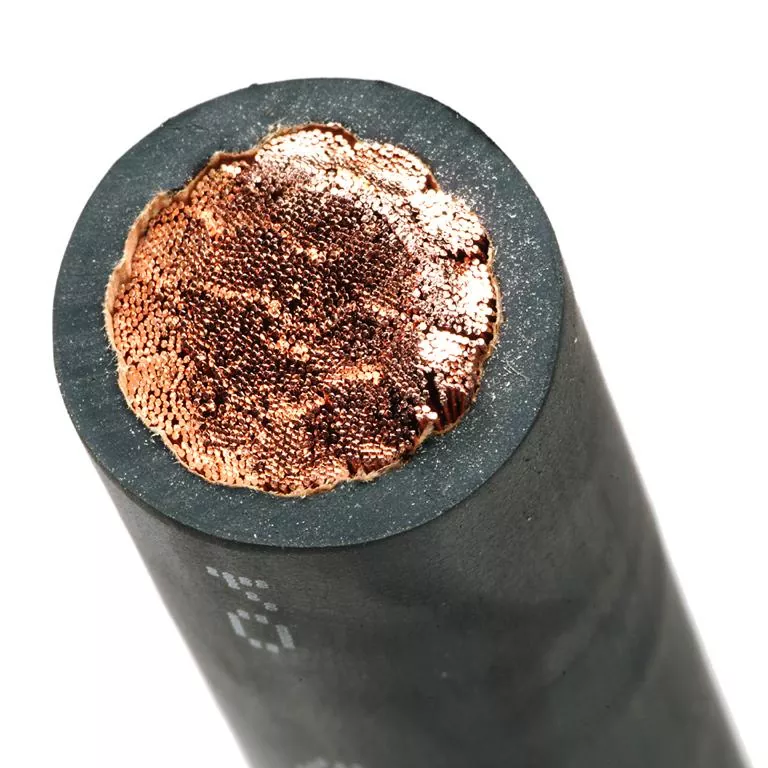
When selecting a cable for demanding welding environments, one question dominates: Can Rubber Insulated Welding Cable truly withstand extreme temperatures and harsh workshop conditions? At DAYA, the answer is a definitive yes, provided the cable meets rigorous manufacturing standards. Unlike standard PVC alternatives, Rubber Insulated Welding Cable is engineered for flexibility, thermal resilience, and mechanical toughness.
Thermal Performance and Durability
Rubber Insulated Welding Cable typically operates within a temperature range of -40°C to +90°C (even up to 105°C for certain compounds), making it superior in both freezing and high-heat scenarios. Below is a comparison of key properties:
| Property | Rubber Insulated Welding Cable | Standard PVC Cable |
|---|---|---|
| Low Temperature Flexibility | Excellent (no cracking down to -40°C) | Poor (stiff and brittle below -10°C) |
| High Heat Resistance | Up to 90-105°C | Up to 70°C |
| Oil & Chemical Resistance | High (neoprene/EPDM compounds) | Low to Moderate |
| Abrasion Resistance | Outstanding | Moderate |
| Flame Retardancy | Self-extinguishing (UL/CSA rated) | Often non-compliant |
In harsh workshops where oil, grease, UV radiation, and physical abrasion are constant threats, DAYA’s Rubber Insulated Welding Cable demonstrates unmatched resilience. The rubber jacket resists cuts, tears, and crushing, ensuring uninterrupted power delivery to welding equipment.
FAQ - Rubber Insulated Welding Cable
1. Can Rubber Insulated Welding Cable be used in freezing outdoor conditions without cracking?
Yes. High-grade Rubber Insulated Welding Cable remains flexible down to -40°C. The thermoset rubber compound does not become brittle like PVC, so it can be coiled, uncoiled, and dragged across icy surfaces without insulation fractures. DAYA cables are cold-tested to guarantee performance in arctic or winter workshop environments.
2. Does Rubber Insulated Welding Cable resist damage from welding spatter and hot slag?
Absolutely. The outer rubber sheath is formulated to withstand brief contact with hot spatter (up to approximately 300°C for short durations). While it is not fireproof, it resists ignition and melting better than PVC. For high-spatter zones, DAYA offers extra-thick Rubber Insulated Welding Cable that deflects molten metal and reduces burn-through risk.
3. How long can Rubber Insulated Welding Cable last in a heavy-duty fabrication shop?
With proper use and moderate care, a quality Rubber Insulated Welding Cable from DAYA typically lasts 5 to 10 years in daily industrial service. Factors include mechanical abrasion, chemical exposure, and electrical overload. Regular inspection for cuts and compression damage will extend its life. Unlike PVC, rubber’s memory allows it to return to shape after crushing, preventing internal conductor fatigue.
Real-World Performance in Harsh Conditions
Workshops often combine heat, oil, forklift traffic, and sharp metal edges. A Rubber Insulated Welding Cable excels here because:
-
Oil resistance: Prevents jacket swelling or softening when exposed to hydraulic fluids or lubricants.
-
Abrasion resistance: Withstands dragging across concrete and steel decking.
-
UV stability: Rubber compounds resist cracking from sunlight or welding arc UV.
DAYA manufactures Rubber Insulated Welding Cable that meets IEC, UL, and CSA standards, ensuring every meter delivers consistent current and operator safety.
For expert guidance on selecting the right Rubber Insulated Welding Cable for your extreme environment, reach out to DAYA today. Our team provides technical datasheets, custom length options, and fast shipping. Visit our website or email sales to discuss your workshop needs.